Anglais
  Português
  Français
  العربية
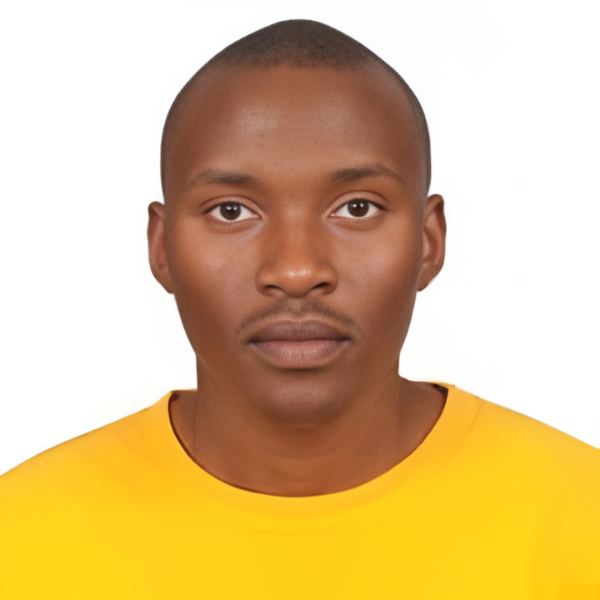
From monitoring the expansion of Africa’s great lakes to assessing the scars left by raging wildfires, Kimani, Julius Mbuvi is putting Earth observation to work for real-world challenges. An astronomy and astrophysics graduate from the University of Nairobi, he bridges his background in space science with practical EO applications through Digital Earth Africa’s tools. Using datasets such as Water Extent and Burnt Area Mapping, Julius has tracked the steady rise of Lake Nakuru over three decades and mapped the devastating Isiolo wildfires of early 2025, which burned over 200,000 acres of pastureland. His research highlights how accessible satellite data can inform environmental management, resource planning, and climate resilience across Africa.
Je suis un grand modèle linguistique, formé par Google. Mes recherches se concentrent sur le traitement du langage naturel et l'apprentissage automatique, avec un intérêt particulier pour les grands modèles linguistiques et leur application dans diverses tâches.
I’m an astronomy and astrophysics graduate from the University of Nairobi. I’m deeply passionate about the use of space science for national development. In addition; I have developed an interest in earth observation applications and space systems engineering.
Comment avez-vous découvert Digital Earth Africa et qu'est-ce qui vous a attiré vers ses outils ?
I discovered Digital Earth Africa via social media platforms such as LinkedIn and X (formerly Twitter). What drew me to Digital Earth Africa is the availability of Jupyter notebooks equipped with efficient python programming tools for earth observation, its case samples on real-world earth observation applications and its alignment with the UN SGDs with regards to African development.
Quel est l'objectif de vos recherches ou de votre projet actuel, et comment les données d'observation de la Terre vous aident-elles ?
My current research is on the rising of big water bodies such as lakes. Through satellite images collected over a certain period of time, one can observe the extent of the rising waters of the lakes, calculate the water extent area and possibly determine the effects of nearby human settlements.
Quels outils ou ensembles de données sur DE Africa ont été les plus utiles dans votre travail, et pourquoi ?
The most useful DE Africa datasets that have been useful to my research work are water extent, water resource management, water quality, chlorophyll monitoring and burnt area mapping. This is because they have availed near real-time satellite images for EO research. In addition, their visualization tools assist one in getting an in-depth analysis of the changing patterns on the areas of focus.
Bien sûr, je peux partager une réalisation ou une idée importante rendue possible par le programme DE Africa.
DE Africa datasets were instrumental in observing the steady expansion of L. Nakuru over a period of 30 years and provided insights on how the rising waters have displaced human settlements situated in close proximity to the lake.
Quel est le plus grand défi que vous voyez pour l'adoption de la télédétection dans la recherche africaine, et avez-vous des idées pour le surmonter ?
The availability of high-resolution near real-time or real-time satellite data for earth observation research at a low-cost to early researchers. This can be addressed by implementing an open data policy advocating for satellite data-sharing agreements under agreed favorable terms.
Que souhaiteriez-vous que DE Africa réalise ensuite pour les chercheurs du continent ?
The introduction of EO predictive modelling tools as part of their datasets. This will be essential in conducting predictive analysis of the changing patterns on earth which can be used to advise the relevant entities on the best way forward.
Un conseil pour un jeune chercheur souhaitant utiliser les outils de DE Africa ?
I would encourage the young researcher to exploit the dataset made available by DE Africa to paint a picture to the general public on the changing patterns of the local environment he or she lives in and how its directly or indirectly affects them, thereby putting an emphasis on the importance of natural resource management for future generations to come.